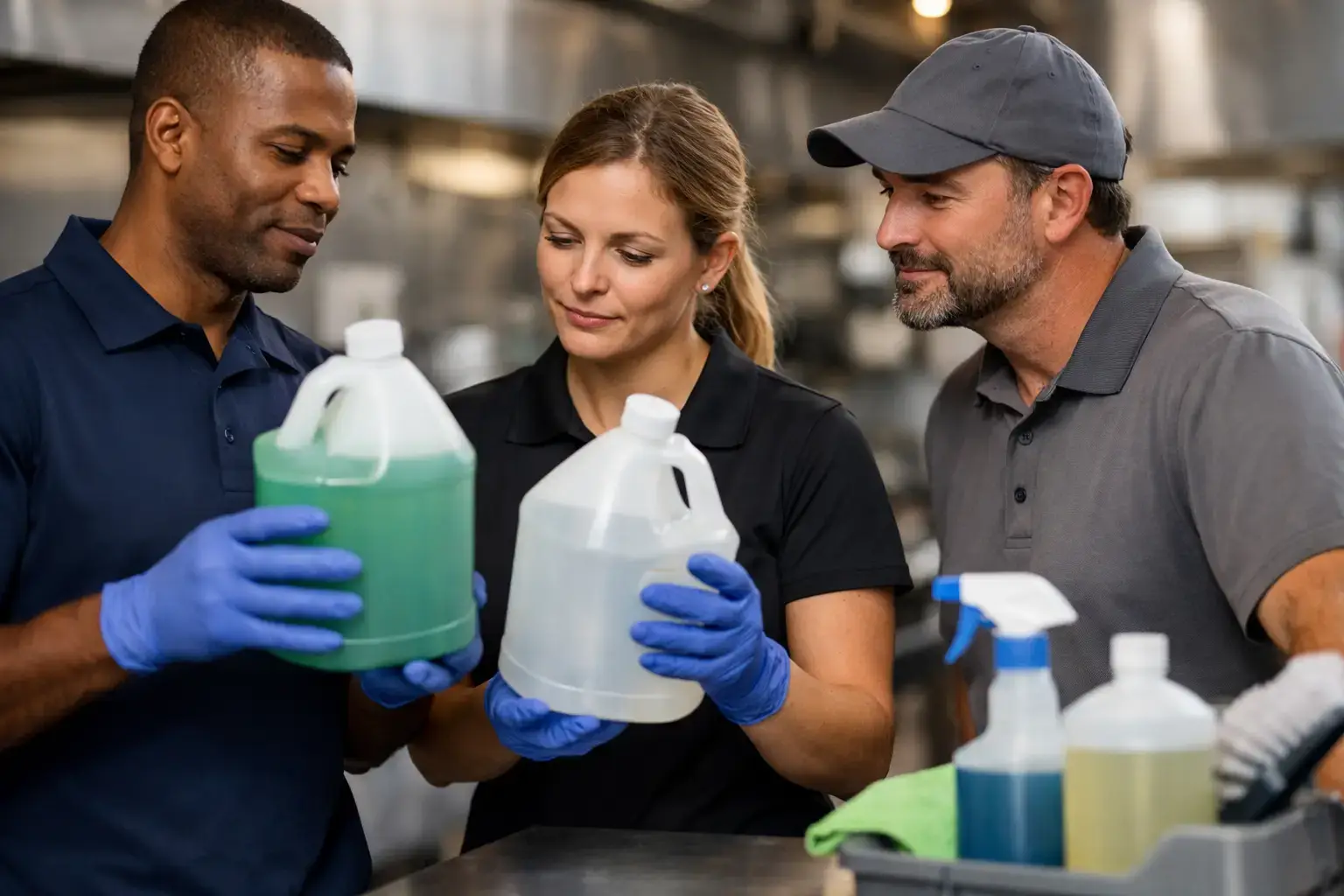
Grease buildup is rarely just a cleaning problem. In a plant, hangar, kitchen, warehouse, or public facility, it can become a slip hazard, an inspection issue, a maintenance burden, and a worker exposure concern at the same time. That is why choosing a low toxicity commercial degreaser deserves more scrutiny than a quick label comparison. For institutional buyers, the right product has to remove oils, carbon, grime, and residues without creating unnecessary risk for staff, surfaces, or compliance programs.
What a low toxicity commercial degreaser really means
The phrase sounds straightforward, but in commercial purchasing it needs a more disciplined definition. A low toxicity commercial degreaser is not simply a product marketed as green or mild. It is a degreasing formulation designed to reduce harmful exposure profiles while still performing in professional settings where soils are heavy, repeat cleaning is common, and documentation matters.
That distinction matters because many facilities have moved past the old assumption that stronger odor and harsher chemistry automatically mean better results. In practice, some legacy degreasers create avoidable trade-offs. They may leave teams dealing with stronger fumes, more restrictive PPE requirements, surface compatibility issues, or waste handling concerns that complicate day-to-day operations.
Low toxicity does not mean weak. It means the formulation is engineered to balance cleaning power with safer use characteristics. For procurement teams and facilities managers, that balance should be verified through technical data, SDS review, use instructions, and fit for the environment where it will actually be deployed.
Where low toxicity matters most
In high-compliance facilities, degreaser selection affects more than the janitorial closet. Environmental services teams, maintenance crews, production staff, and safety officers all feel the impact. Healthcare and public-facing environments may prioritize lower odor, safer indoor use, and reduced disruption around occupants. Manufacturing and aviation settings may focus on residue removal, equipment compatibility, and predictable performance under demanding soil loads. Government and military buyers often need documentation discipline as much as cleaning performance.
A low toxicity commercial degreaser is especially valuable where cleaning is frequent and exposure can become cumulative. One aggressive product used across shifts, across departments, and across months can create a very different risk profile than a targeted formulation that gets the same job done with fewer hazards.
That said, not every degreasing task has the same tolerance for compromise. Some deposits are deeply baked on, carbonized, or mixed with metal fines and industrial soils. In those cases, product selection should be based on the actual soil type, dwell time available, agitation method, rinse requirements, and surface involved. Safer chemistry can perform extremely well, but only when matched to the job instead of expected to solve every cleaning problem the same way.
How to evaluate performance without overbuying chemistry
Commercial buyers often make one of two mistakes. They either default to the harshest available degreaser out of habit, or they choose a safer product based on broad marketing claims without testing it against real conditions. Neither approach is efficient.
A better process starts with the soil. Petroleum grease, food fats, hydraulic fluids, machining oils, and general industrial grime do not behave the same way. Some release quickly with surfactant-based chemistry. Others need heat, dwell time, mechanical action, or a more specialized formulation. If a product appears ineffective, the issue may not be overall strength. It may be a mismatch between chemistry and residue.
Surface type also matters. Floors, stainless steel, painted equipment, plastics, rubber components, and coated metals can respond differently to degreasers. A product that works well on one substrate may dull, stain, or degrade another if used improperly. Buyers responsible for mixed-use facilities should look for clear compatibility guidance rather than assuming one degreaser can safely cover every surface in the building.
Use conditions are the third variable. Spray-and-wipe cleaning in an occupied facility is not the same as parts washing in a maintenance area. Ventilation, rinse access, water temperature, worker training, and frequency of use all influence what qualifies as the right product. A low toxicity commercial degreaser should support the realities of the worksite, not just the promise on a sell sheet.
Compliance is part of product performance
For serious facilities, cleaning chemistry is a documentation issue as much as an operations issue. A degreaser may remove soil effectively, but if it creates uncertainty around hazard communication, worker safety, or purchasing review, it becomes harder to deploy at scale.
That is why buyers should evaluate SDS documentation, technical specifications, storage requirements, handling instructions, and any available certifications or claims relevant to their environment. Healthcare, aviation, food-related operations, federal procurement, and industrial manufacturing all have their own review pressures. The product has to fit the facility’s compliance framework, not just the cleaning task.
This is where disciplined sourcing becomes valuable. Suppliers that understand institutional purchasing can help buyers move beyond generic marketing language and into the details that support approval, rollout, and repeat ordering. Veteran Commercial Cleaning operates in that lane, where product performance, documentation readiness, and operational trust have to work together.
What to look for in a low toxicity commercial degreaser
A useful evaluation is less about chasing buzzwords and more about asking the right operational questions. Does the product have a manageable hazard profile for the staff who will use it daily? Is the odor level appropriate for occupied or sensitive environments? Can it be used on the surfaces present in your facility? Are dilution guidance and use instructions clear enough to support consistent results across shifts and locations?
It is also worth looking at rinse behavior and residue. Some degreasers cut through heavy soil but leave behind a film that creates another cleaning step or interferes with equipment appearance. Others may clean more gradually but finish cleaner and support easier repeat maintenance. Over time, that can make a meaningful difference in labor efficiency.
Training burden matters too. If a product is safer but overly complex to deploy, it may not perform well in practice. The best choices are often the ones that fit existing workflows with minimal confusion while improving safety and reducing unnecessary chemical harshness.
Common trade-offs buyers should expect
There is no perfect degreaser for every application. Lower-toxicity chemistry can bring real advantages, but buyers should still evaluate trade-offs honestly.
One common trade-off is dwell time. Some safer formulations need a little more contact time or light agitation to match the performance of highly aggressive solvents. In many facilities, that is an acceptable exchange if it reduces ventilation concerns, worker discomfort, or surface damage risk. In other environments, production speed may outweigh that benefit.
Another trade-off is specialization. A low toxicity commercial degreaser may handle routine and moderate soil loads extremely well but not be the best choice for every severe maintenance task. That does not make it a poor product. It means the facility may need a more deliberate chemical program instead of expecting a single SKU to solve every contamination problem.
There can also be a perception issue. Teams used to judging cleaning strength by smell or immediate bite may underestimate safer chemistry at first. That is why side-by-side testing in actual conditions is more reliable than assumptions based on legacy products.
Making the switch without disrupting operations
If your facility is considering a change, the most effective path is controlled evaluation. Identify the main degreasing tasks by soil type, surface, and frequency. Review the technical documentation first, then test the product in representative conditions with the staff who will actually use it. Measure not just whether it cleans, but how it affects odor, handling, rinse effort, worker acceptance, and consistency.
It also helps to define where low-toxicity chemistry will create the most value first. Occupied spaces, routine maintenance zones, and areas with frequent worker contact are often strong starting points. Facilities can then decide whether the same product can be expanded to heavier tasks or whether a two-tier approach is more realistic.
The strongest purchasing decisions usually come from this mindset: reduce unnecessary hazard where you can, maintain performance where you must, and document the reason for the choice. That is a disciplined standard, and it fits the realities of commercial, industrial, and government environments.
A low toxicity commercial degreaser is not a shortcut to better cleaning. It is a smarter specification when safety, compliance, and performance all matter at once. The best choice is the one your team can defend on paper, use with confidence on the floor, and rely on again under real operational pressure.